
Dorayaki: A Fusion of Modern Pop Culture and Ancient Tradition
Doraemon, the beloved Japanese manga character known worldwide, has a favorite snack – dorayaki. As Doraemon’s popularity spread globally, so did the recognition of this traditional Japanese confection. However, beneath its simple appearance lies a surprisingly rich history and deep cultural significance.
The pairing of Doraemon, an icon of modern pop culture, with dorayaki, a treat with centuries of tradition, might seem odd at first. Yet, this combination perfectly encapsulates the Japanese cultural characteristic of balancing tradition with innovation.
The Origins of Dorayaki: A Sweet with Ancient Roots
The history of dorayaki stretches back further than many might imagine, with fascinating tales surrounding its origins.
The most widely accepted theory about the name “dorayaki” suggests it comes from its resemblance to a “dora” (gong). An interesting legend tells that in the late Heian period, Minamoto no Yoshitsune and Benkei, while on their travels, made sweets on an actual gong as a thank-you gift for people who had helped them. This tale symbolically represents the origins of dorayaki.
However, the appearance of sweets similar to modern dorayaki came much later. The prototype of dorayaki is believed to be “sukesoyaki,” a baked confection that emerged in the early 1600s during the early Edo period. This was a thin, baked dough filled with bean paste and folded into a square shape, showing the early form of what would become dorayaki.
Later, in the early Meiji era, a round “dorayaki” was said to have been created, though this was still quite different from the dorayaki we know today. The soft-textured dorayaki using castella-like dough, which we are familiar with today, is said to have appeared in the Taisho era.
Thus, dorayaki has evolved gradually over many years. From ancient tales to the Edo period, through Meiji and Taisho eras, it has changed with the times, remaining beloved by Japanese people to this day. Its long history reflects the depth of Japanese food culture and its flexibility in preserving tradition while embracing new elements.
The Structure and Production of Dorayaki: The Secret of Its Simple Beauty
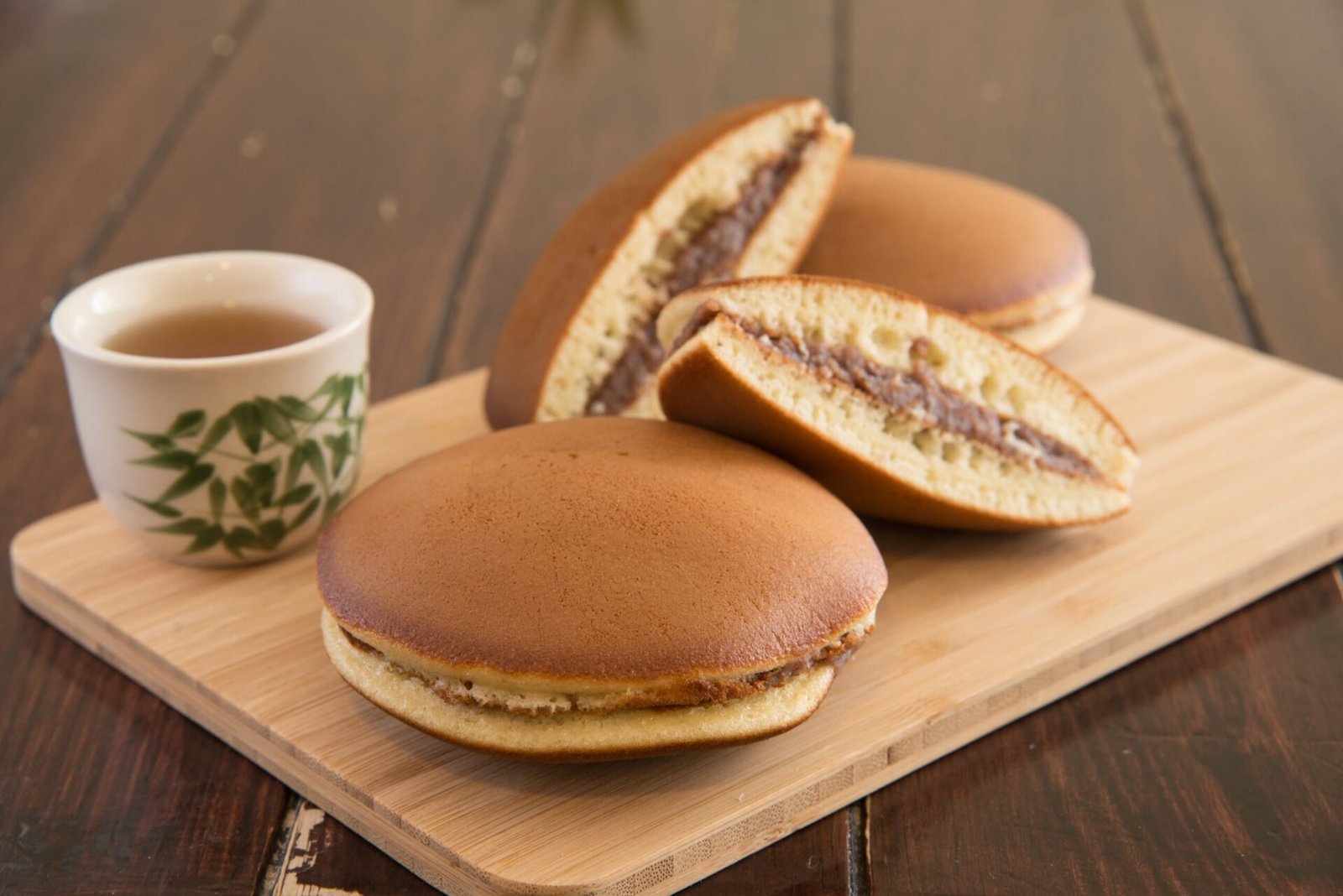
The basic structure of dorayaki is simple: sweet bean paste sandwiched between two thin, soft pancakes made from castella-like batter. This humble combination has captivated many people for generations.
The main ingredients are:
- Castella batter: Flour, eggs, sugar, honey
- Anko (sweet bean paste): Red beans, sugar
The production process typically follows these steps:
- Make the batter: Mix the ingredients to create the castella-like batter.
- Cook the pancakes: Cook the batter on a hot plate in circular shapes.
- Add the filling: Sandwich the sweet bean paste between two cooked pancakes.
This simple method is the key to dorayaki’s deliciousness. The freshly cooked pancakes’ aroma and the smooth sweetness of the bean paste create a perfect balance.
Varieties of Dorayaki: A Traditional Sweet Evolving
While the basic dorayaki uses sweet red bean paste, there are now many variations:
- Cream dorayaki: Uses fresh cream
- Matcha dorayaki: Matcha powder is mixed into the batter
- Chocolate dorayaki: Uses chocolate cream
- Seasonal dorayaki: Uses seasonal ingredients like cherry blossom, chestnut, or yuzu

The Nutritional Value of Dorayaki: A Surprisingly Healthy Japanese Sweet
Dorayaki has a relatively low calorie count compared to other Japanese sweets and offers a good nutritional balance. Here’s the nutritional information per 100g:
| Nutrient | Amount |
|---|---|
| Calories | 284kcal |
| Protein | 6.6g |
| Fat | 2.5g |
| Carbohydrates | 58.7g |
| Dietary Fiber | 3.1g |
Compared to other Japanese sweets, dorayaki is low in fat and rich in protein and dietary fiber. The polyphenols in red beans are also noteworthy, making dorayaki a relatively healthy snack option when consumed in moderation.
Tokyo’s Three Great Dorayaki: A World of Exquisite Flavors Crafted by Long-established Shops
Tokyo is home to three famous dorayaki shops known as “Tokyo’s Three Great Dorayaki.” Each with its unique characteristics and charm, these shops are:
The dorayaki from these three shops are made with unique methods and ingredients, drawing on years of experience and skill. They differ in details such as the thickness and texture of the pancakes, the type of sugar used, and the sweetness of the bean paste. Trying each allows you to appreciate the high level of skill of Japanese confectioners and the depth of dorayaki as a confection.
These Tokyo’s Three Great Dorayaki are not just delicious sweets, but symbols of Japanese food culture, filled with each shop’s history, local culture, and the passion and skill of wagashi artisans. Visiting these famous shops and enjoying their historical flavors is an excellent way to experience Tokyo’s wagashi culture.
Conclusion: The Enduring Charm of Dorayaki
Dorayaki has been loved throughout Japan’s long history, from ancient times to the present day. Its appeal lies in its simple yet profound taste and its ability to evolve with the times.
From traditional red bean paste dorayaki to creative versions using new ingredients, dorayaki has continued to captivate people’s hearts while changing its form. Now, it is loved worldwide as one of Japan’s representative sweets.
The next time you eat dorayaki, try to sense the history and culture encapsulated in each bite. You’re sure to discover new charms in this beloved Japanese sweet.